Project Overview
The Product
My client was a contract labratory which provides mirobiological and chemical testing, scientific consulitng and regulatory services. Initially, all testing services are managed through phone calls, emails, and paper forms.
Project Duration
September 2021 – February 2023
The Problem
The absence of an online customer portal forces clients and employees to engage in time-consuming, manual processes causing inefficiencies, poor communication, and reduced productivity.
The Goal
Create an online client portal where customers can submit samples to the lab for testing, view test results, and contact company representatives.
My Role
UX Designer
Responsibilities
- Communicate with stakeholders to understand requirements
- Creating low and high fidelity designs
- Conducting user testing
Understanding the User
User Research
Our first step was to better understand user’s needs and project requirements. I assisted the project manager with conducting user interviews. We spoke with company executives, the sample receiving team, lab testing personnel, and customers.
Pain Points
We identified a number of pain points we wanted to address.
Consistency – No Uniform Process
Because all order submissions are done through manual processes, such as phone calls, emails, and paper forms, there isn’t a uniform sample submission process. Customers and employees find it difficult to keep order information organized. This can lead to problems like miscommunications, lost information, and duplicated submissions. Different individuals at the same company may submit orders in different ways or have different expectations.
Communication – No Order Tracking
Customers have no easy way to check on the status of the samples they submitted. A single sample can have multiple tests performed. Even though some tests only take a short amount of time, others can take up to a month and customers are only notified of the results after all testing is complete. They would like a way to view preliminary results and testing updates.
There also is not an easy way to see if a sample has an issue (such as spilling in transport or mislabeling). Customers and employees would like to make it easier to communicate so testing isn’t delayed.
Safety – Missing Information
Because there is not a uniform sample submission process with clear requirements, samples are often sent to the lab without proper documentation. The lab may not know what’s arrived in their lab and what testing is needed. This can cause testing delays because the company will need to contact the customer for clarity. It can also lead to samples being stored improperly and being ruined (requiring new samples to be sent over). Unmarked samples can also be dangerous. The lab could have no way of knowing if they are working with a hazardous or controlled substance.
Time- Redundant Work
After sample information is collected, it needs to be entered into the laboratory tracking system before the lab can begin testing because clients are unable to enter sample information directly into the system themselves. This is a manual step that’s time consuming.
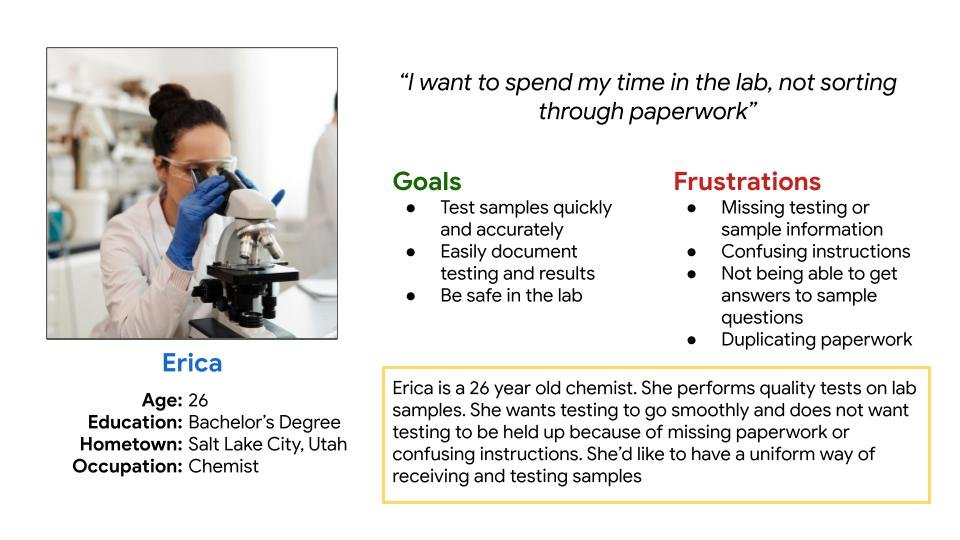
Personas
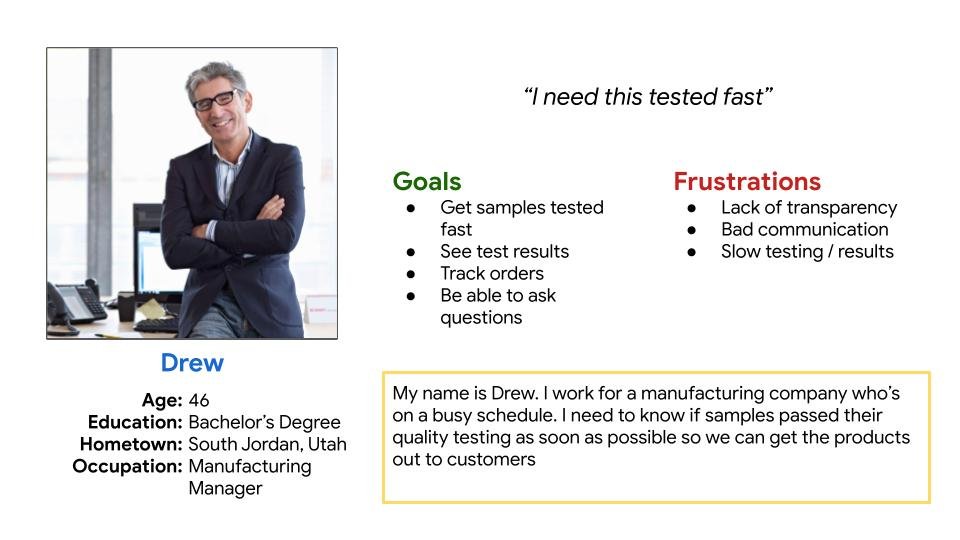
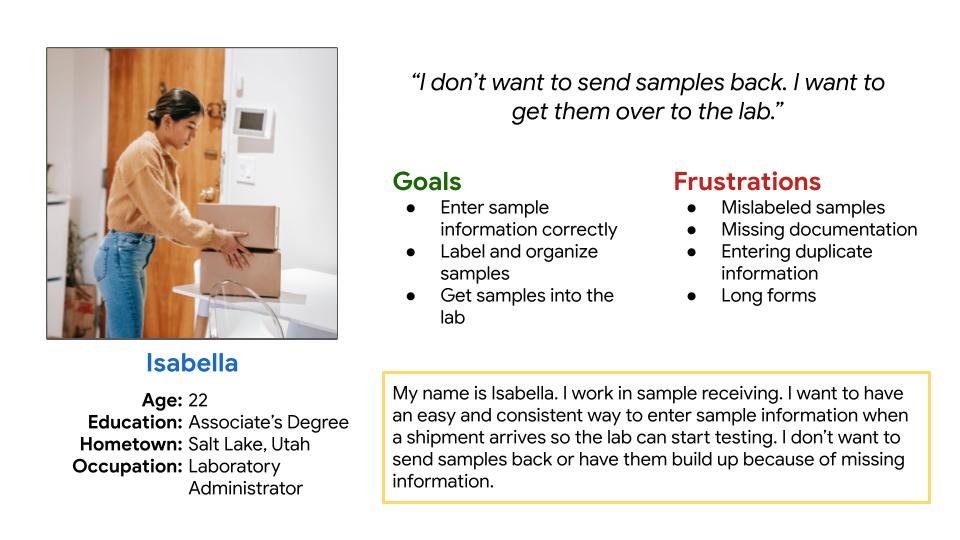
Based on our findings, I created personas to represent our users.
Designs
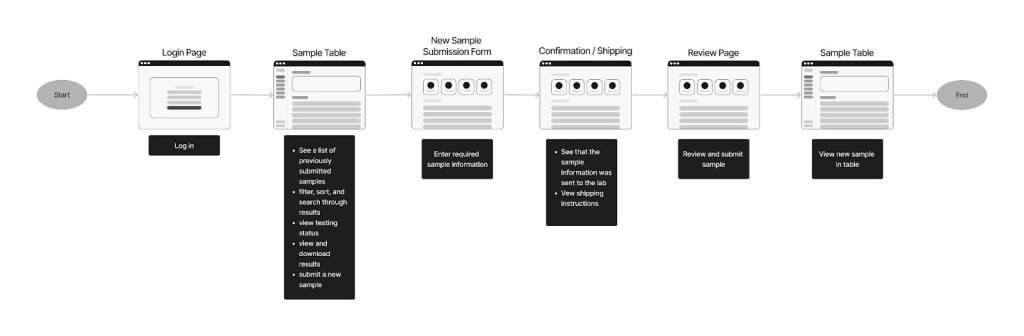
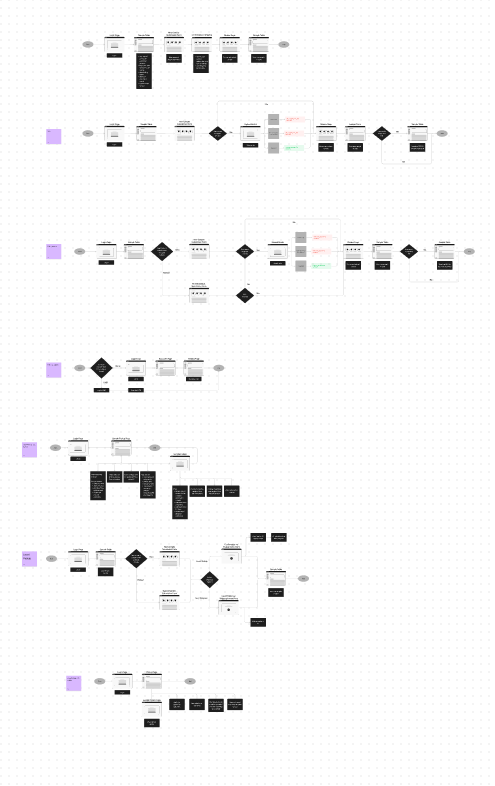
Userflows
Based on our initial findings, we created requirements and userflow diagrams for a customer portal that would address user’s concerns. We wanted to creata a place where:
- Customers would be able to submit samples for testing
- Customer’s could see the testing status and view preliminary and final results for submitted samples
- Customers could receive notifications and alerts if there were any problems with their sample or testing
- Customers would be given shipping instructions
- Customers would be required to enter all information needed by the lab
- Samples information would be directly a dded into the testing system so it would not need to be reentered by admin
- And more
Mockups and Prototypes
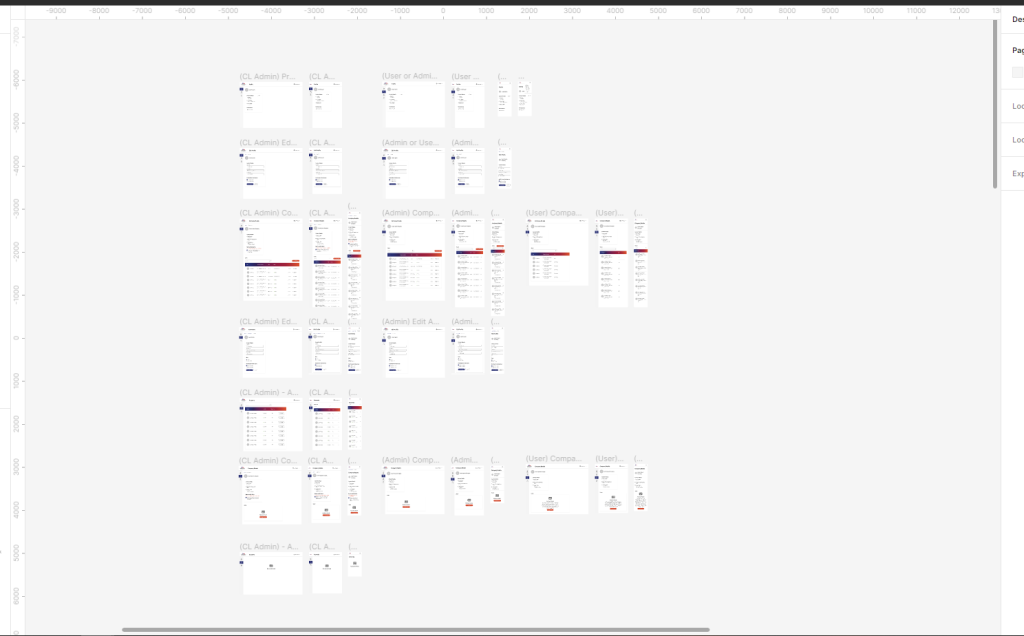
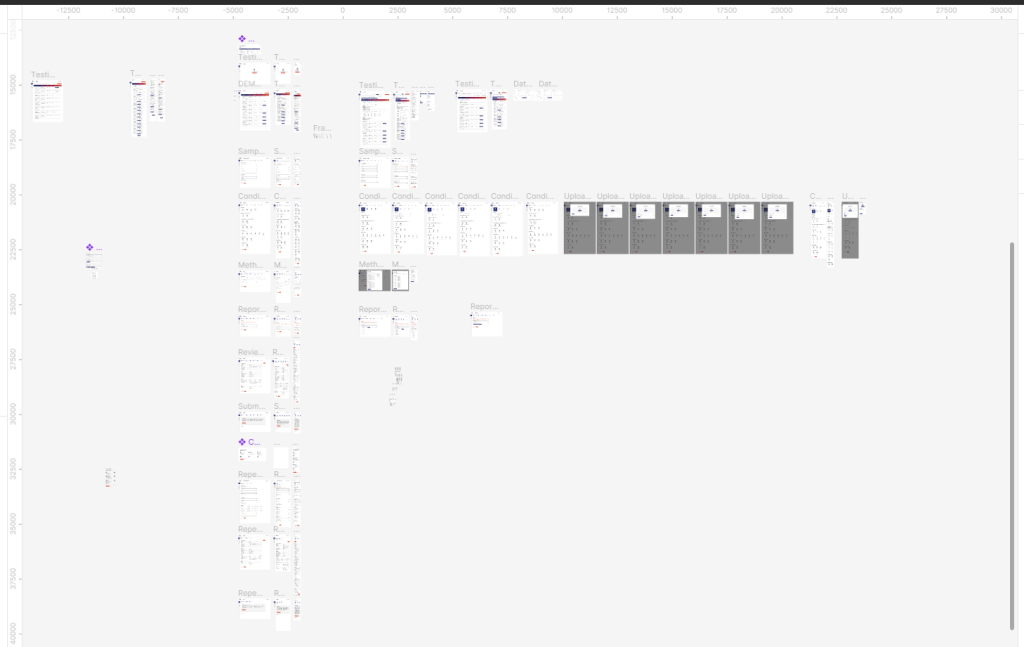
Once we had a plan mapped out, I created low and high fidelity prototypes which were used for user testing.
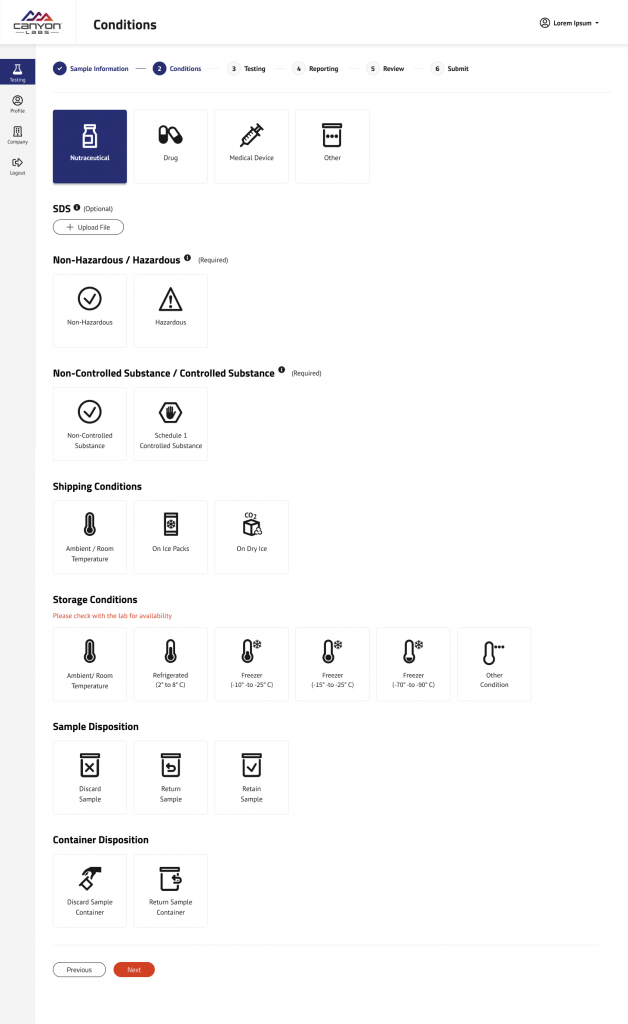
This is an example of one of the screens from the design. We took inspiration from turbo tax to create a user friendly form for the sample submission process.
The images below show a zoomed a view of some of the screens from the high sample submission fidelity prototype.
Usability Studies and Findings
Along with the project manager, I helped to conduct user tests. We asked individuals to walk us through how they would conduct tasks like submitting new samples for testing, looking for sample testing results, and manage account information. Based on the feedback we received, the design went through multiple rounds of iteration. We added trimmed down sections of the process that were cumbersome and added new features base don users suggestions. For example,
- A section where customers can schedule sample pickup through a courier
- Templates where users can save testing information about products so they won’t need to reenter the same information for samples they submit later
- Testing bundles so users can request a group of related tests instead of needing to find each one in the testing list
- We hid irrelevant tests from users so they wouldn’t need to search through a list of all services provided by the company, just the ones relevant to them
- And more
Accessibility
We wanted to make sure to consider accessibility with our design.
- We designed for multiple screen sizes include mobile to account for different user’s needs
- We evaluated the size and contrast for text to ensure legibility
- We interviewed and conducted a user test with a colorblind individual
Going Forward
Impact
The first version of the project was released and is being used by customers. The plan is to eventually have all customers using this process.
What I Learned
This project highlighted the importance of user feedback and iteration in the design process. We were able to get feedback from many stakeholders including individuals who worked on the business side of the company, individuals in sample receiving, individuals who perform testing in the lab, as well as customers. Each person had a unique perspective and brought up suggestions and challenges with our designs. As a result, the design underwent many rounds of testing and feedback but each time it became a better product. We were able to plan out new features that users were excited for and remove sections of the process that caused frustration.
Next Steps
The next steps with the design would be to conduct additional user interviews to identify new pain points and additional features to add in later versions of the portal.